
Health Insurance Terminology Explained for Adults 30-50
Master health insurance terminology explained in simple terms! Learn key concepts to confidently compare plans and choose the right coverage.
Health insurance terminology is the set of specific words and phrases used to describe coverage elements, costs, and processes within health insurance policies. If you have ever stared at a policy document and felt lost, you are not alone. Terms like “deductible,” “coinsurance,” and “out-of-pocket maximum” appear on every plan, yet most people only discover what they mean after receiving an unexpected bill. This guide breaks down the health insurance jargon explained in plain language, so you can compare plans confidently and choose coverage that actually fits your life.
What are the key health insurance terms you need to know?
Understanding health insurance terms defined correctly starts with the six terms that appear on virtually every policy. These are the ones that directly control how much you pay, when you pay it, and how much protection you actually have.
-
Premium: The fixed periodic payment you make monthly or annually to keep your policy active, regardless of whether you use any medical services. Think of it as your membership fee. Premium amounts are influenced by your age, existing health conditions, and the level of coverage you select, meaning older applicants or those with prior conditions typically pay more.
-
Deductible: The amount you pay out of your own pocket before your insurer starts covering costs. If your deductible is $1,500, you cover the first $1,500 of medical expenses each year before the plan contributes a cent.
-
Copayment vs. coinsurance: A copayment is a fixed fee paid for a specific service, such as $30 for a primary care visit. Coinsurance is a percentage of the total cost, such as 20% of a hospital bill. The critical difference is predictability. A copay is known in advance; coinsurance depends on the final bill, which is often impossible to calculate before treatment.
-
Out-of-pocket maximum: The yearly cap on what you pay for covered services. Once you reach this limit, your insurer pays 100% of covered costs for the rest of the year. Family plans can carry both individual and family-level limits, so one family member hitting their cap does not automatically protect everyone else.
-
Sum insured: The maximum amount your insurer will pay out across all claims in a policy year. Choosing too low a sum insured is one of the most common and costly mistakes people make.
-
Coverage limits: Specific caps on what the plan will pay for particular treatments or categories of care, separate from the overall sum insured.
Pro Tip: Consumers often misuse “copay” as a catch-all term for any out-of-pocket cost. Using the terms precisely helps you budget accurately and prevents surprises when your explanation of benefits arrives.
How do provider networks and coverage tiers affect your costs?

Your insurer does not pay the same rate at every hospital or clinic. In-network providers have contracts with insurance companies and offer services at lower negotiated rates. Out-of-network providers have no such agreement, which means higher fees for you and sometimes zero coverage from your plan. This single distinction can turn a manageable bill into a financial shock.
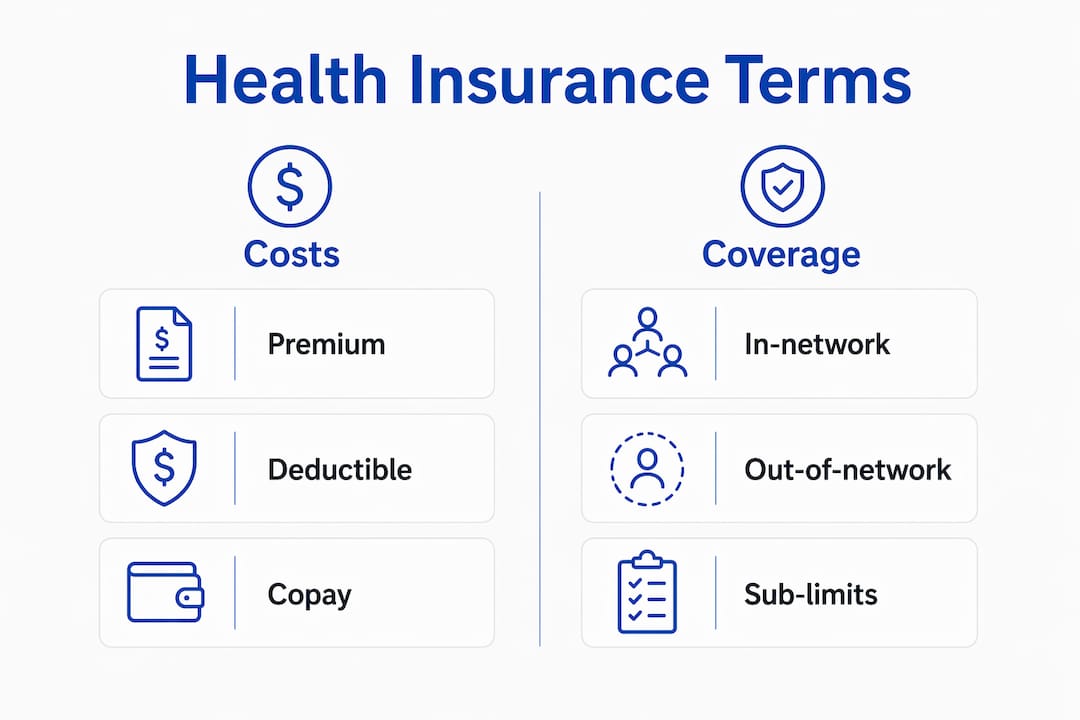
Most plans also divide in-network providers into tiers. Tier 1 providers are preferred facilities or specialists where your copay or coinsurance is lowest. Tier 2 providers are still in-network but carry higher cost-sharing. Choosing a Tier 2 specialist when a Tier 1 option exists for the same procedure can cost you hundreds of dollars more per visit.
| Provider type | Cost to you | Cashless treatment available? |
|---|---|---|
| In-network (Tier 1) | Lowest copay or coinsurance | Yes, at participating hospitals |
| In-network (Tier 2) | Moderate copay or coinsurance | Yes, but rates are higher |
| Out-of-network | Highest cost, may be uncovered | No. You pay upfront and claim reimbursement |
Cashless treatment is available only at in-network hospitals. If you go out-of-network, you pay the full bill upfront and then submit documents for reimbursement. Missing even one original document can delay or reduce your payout significantly.
Pro Tip: Before scheduling any procedure, call your insurer and confirm the provider’s network tier. Do not rely on the hospital’s own website. Network agreements change, and an outdated listing can leave you with an unexpected bill.
You can also read more about comparing private health insurance to understand how network structures vary across plans before you commit.
What do subscriber, insured, patient, and policyholder actually mean?
These four terms appear on insurance cards, billing forms, and claim submissions. Confusion between subscriber, insured, and patient is a frequent cause of claim rejections and billing errors. Getting them right is not a technicality. It directly affects whether your claim gets paid.
Here is what each term means:
- Subscriber: The primary policyholder who enrolled in the plan and is responsible for premium payments. This is usually the employee in a workplace plan or the individual who purchased coverage directly.
- Insured: Any person covered under the policy, including the subscriber and any dependents listed on the plan.
- Patient: The person who actually received the medical care. The patient may be the subscriber, a dependent, or someone else entirely covered under the plan.
- Policyholder: The individual or entity that owns or controls the policy. In most individual plans, the subscriber and policyholder are the same person. In corporate plans, the employer may be the policyholder.
Medical billing errors often arise from confusion between these roles. A claim submitted with the patient’s name in the subscriber field, or vice versa, can trigger an automatic rejection. The fix sounds simple, but it requires you to know which field asks for which person.
Pro Tip: Before submitting any claim, pull out your physical insurance card and match each field on the form to the exact name and ID number printed on the card. Verifying insurance card details before submission is the single fastest way to prevent processing delays.
Understanding these distinctions also matters in corporate or group plans. If you want a broader view of how group coverage works, the Comparepmi guide on corporate health insurance covers the subscriber and policyholder relationship in an employer context.
What are waiting periods, sub-limits, and no-claim bonuses?
These three terms sit in the fine print of most policies, yet they have an outsized effect on the real value of your coverage. Understanding them before you buy a plan is far better than discovering them when you need to make a claim.
Waiting periods are time frames during which your policy will not cover certain conditions or treatments. Pre-existing condition waiting periods commonly range from 2 to 4 years. This means if you have a diagnosed condition when you purchase the policy, you may wait up to four years before that condition is covered. Some plans also impose shorter waiting periods of 30 to 90 days for general illnesses, even for new policyholders with no prior conditions.
Sub-limits are caps on specific expense categories within your overall coverage. A plan with a $200,000 sum insured might cap daily room rent at $300. If your hospital charges $600 per night, you pay the difference out of pocket. The less obvious consequence is that sub-limits on room rent reduce coverage proportionally for other related expenses, such as surgeon fees and nursing charges, because those are often calculated as a percentage of the room rate. A $100,000 hospital bill can leave you with a far larger personal liability than you expected, even with a generous sum insured.
No-claim bonuses reward you for staying healthy. No-claim bonuses can increase your sum insured by 10% to 50% for each claim-free year, without raising your premium. Over five years without a claim, you could end up with significantly more coverage than you originally purchased. This makes no-claim bonuses one of the most underappreciated long-term benefits in any health insurance glossary.
When comparing plans, look at all three of these features together. A plan with a low premium but a four-year waiting period and tight sub-limits may cost you far more in the first few years than a slightly more expensive plan with no sub-limits and a shorter waiting period.
Key takeaways
Understanding health insurance terminology is the foundation of every smart coverage decision, because the terms in your policy directly determine what you pay, when you are covered, and how much protection you actually have.
| Point | Details |
|---|---|
| Premium vs. deductible | Your premium keeps the policy active; your deductible is what you pay before coverage starts. |
| Copay vs. coinsurance | Copays are fixed and predictable; coinsurance is a percentage and varies with the total bill. |
| Network tier matters | Choosing an in-network Tier 1 provider over Tier 2 or out-of-network can save hundreds per visit. |
| Subscriber vs. insured | Misidentifying these roles on claim forms is a leading cause of rejections. Always match your insurance card. |
| Sub-limits and waiting periods | These fine-print terms can dramatically reduce real-world coverage despite a large sum insured. |
Why most people read their policy wrong
I have spent years helping people make sense of private medical insurance, and the pattern I see most often is this: people focus almost entirely on the premium and ignore everything else. They pick the cheapest monthly payment and assume the coverage is roughly equivalent across plans. It rarely is.
Plans with identical premiums can differ dramatically in financial risk once you factor in out-of-pocket maximums and network coverage structures. I have seen people face five-figure surprise bills because they chose an out-of-network specialist without realizing it, or because a sub-limit on room rent cascaded into reduced coverage across the entire hospital stay.
The terms that trip people up most are not the obvious ones. Nobody misunderstands “premium.” The real confusion sits in coinsurance versus copay, in the subscriber versus insured distinction on a claim form, and in the quiet damage a two-year waiting period does when you need coverage for a pre-existing condition in year one. These are the gaps worth closing before you sign anything.
My honest advice: read the policy schedule before you read the marketing brochure. Check the sub-limits table, confirm the waiting periods, and verify your provider’s network tier before every significant procedure. Applying these terms in practice, not just knowing their definitions, is what separates a good insurance decision from an expensive one. You can also explore tips to maximize your coverage once you have the terminology down.
— christopher
How Comparepmi helps you find the right plan
Comparepmi is a free, independent private medical insurance comparison service built to take the guesswork out of choosing coverage. Once you understand the health insurance vocabulary explained in this guide, the next step is putting that knowledge to work by comparing real plans side by side.

Comparepmi gives you personalized quotes from leading UK insurers, with clear breakdowns of premiums, deductibles, network tiers, and sub-limits so you can compare what actually matters. The private medical insurance guide on the site goes deeper on coverage types, plan structures, and how to match a policy to your specific health needs. There are no fees, no obligations, and no pressure. Just clear information and independent advice to help you choose with confidence.
FAQ
What is the difference between a deductible and an out-of-pocket maximum?
A deductible is the amount you pay before your insurance starts covering costs. The out-of-pocket maximum is the total cap on what you pay in a year. Once you hit the maximum, your insurer covers 100% of remaining covered expenses.
Why does it matter whether my doctor is in-network?
In-network providers have negotiated rates with your insurer, which means lower costs for you and access to cashless treatment. Out-of-network care often means higher bills and a reimbursement process that requires upfront payment and full documentation.
What happens if I confuse subscriber and insured on a claim form?
Confusion between these roles is a leading cause of claim rejections. Always match the names and ID numbers on your insurance card to the correct fields on the form before submitting.
How does a no-claim bonus work in practice?
A no-claim bonus increases your sum insured by a set percentage, typically 10% to 50%, for each year you do not make a claim, without raising your premium. Over several claim-free years, this can meaningfully expand your coverage at no extra cost.
What is a sub-limit and why does it matter?
A sub-limit is a cap on a specific expense category within your overall coverage, such as a daily room rent limit. Sub-limits can reduce coverage proportionally across related costs, leaving you with unexpected out-of-pocket expenses even when your total sum insured appears generous.